

Furnishing a vacation rental in Hawaii involves more than selecting attractive furniture and coastal-inspired décor. Window treatments also influence the appearance of a property, the comfort of its guests, and the amount of maintenance required between bookings.
The right drapery can complement the interior design while providing practical benefits such as light control, privacy, and convenient window coverage. For property owners and managers, the goal is to select window treatments that suit each room, accommodate regular use, and remain manageable over time.
Whether you are furnishing a new vacation rental or updating an existing property, understanding fabric options, hardware requirements, and room-specific needs can help you make a more informed decision.
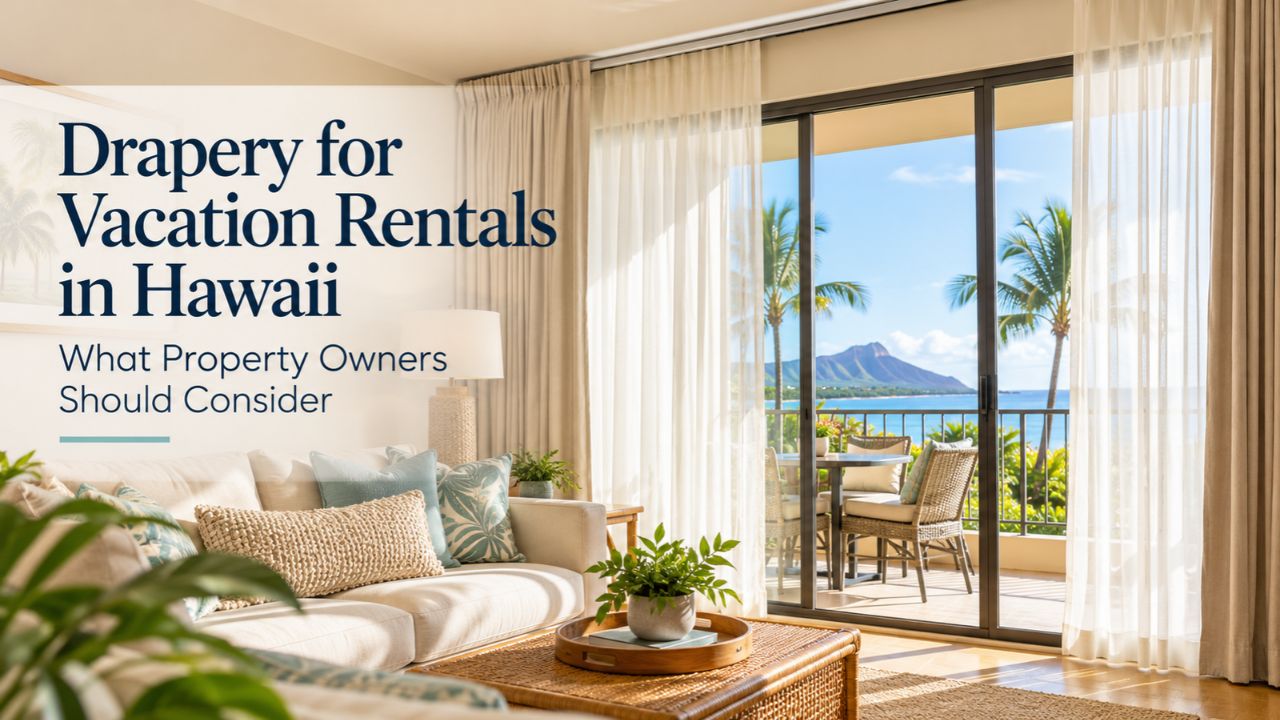
1. Match Drapery to Your Vacation Rental’s Interior Design
A vacation rental should feel welcoming and cohesive. Drapery can connect furniture, flooring, wall colors, and decorative accessories without overwhelming the room.
For a coastal-inspired property, neutral colors and understated textures can complement the surrounding environment while keeping the interior versatile.
Consider these options when choosing drapery:
- Light neutrals: White, ivory, beige, and sand tones work well with many coastal and contemporary interiors.
- Textured fabrics: Subtle woven textures add visual interest without competing with furniture or artwork.
- Solid colors: Coordinated panels create a consistent appearance across bedrooms and living areas.
- Simple patterns: Small-scale patterns can introduce character while maintaining a balanced design.
Consider the property’s existing finishes and how the rooms will appear in listing photographs. Drapery should complement the overall design rather than become a disconnected decorative feature.
If you manage several rental units, selecting a consistent color palette can also simplify future replacements and interior updates.
2. Choose Drapery Fabric With Maintenance in Mind
Vacation rentals may experience frequent guest turnover, making routine maintenance an important consideration when selecting window treatments.
The most suitable fabric depends on the property, window location, frequency of use, and manufacturer’s care instructions.
Before ordering drapery, evaluate the following factors.
- Cleaning requirements: Check whether the fabric requires professional cleaning, machine washing, or spot cleaning.
- Wrinkle resistance: Consider how the material looks after repeated opening, closing, and handling.
- Color and texture: Select a finish that complements the interior and can be maintained according to its care instructions.
- Replacement availability: Keeping fabric specifications on record can simplify future repairs or replacements.
Do not assume that every synthetic fabric is more durable than every natural fabric. Performance varies according to fiber composition, weave, lining, finishing, and care.
For a property with frequent bookings, ask your supplier about recommended cleaning procedures before choosing a fabric. This can help you understand the ongoing care requirements rather than focusing only on appearance.
3. Consider Hawaii’s Climate When Selecting Window Treatments
Hawaii’s tropical climate can influence the conditions around windows. Humidity, sunlight, ventilation, and proximity to the coast may affect fabrics and hardware over time.
When planning drapery for a vacation rental, consider the following practical measures.
Evaluate moisture and ventilation
Rooms with limited ventilation may experience elevated moisture levels or condensation under certain conditions. Choose fabrics and hardware suitable for the installation environment, and address ventilation or moisture problems at their source.
Drapery alone cannot prevent dampness or resolve an underlying moisture issue.
Consider sunlight exposure
Windows receiving prolonged direct sunlight may expose fabrics to fading over time. Ask about the fabric’s lightfastness and care requirements, particularly for windows with strong sun exposure.
Select suitable hardware
Coastal environments can be demanding on some metal finishes. Ask your supplier which materials and finishes are appropriate for the property’s exposure conditions.
These considerations are especially relevant when furnishing several rooms or managing multiple rental units over an extended period.
4. Select Drapery According to Each Room’s Purpose
Different rooms have different requirements, so the same fabric and configuration may not work equally well throughout the property.
Living rooms
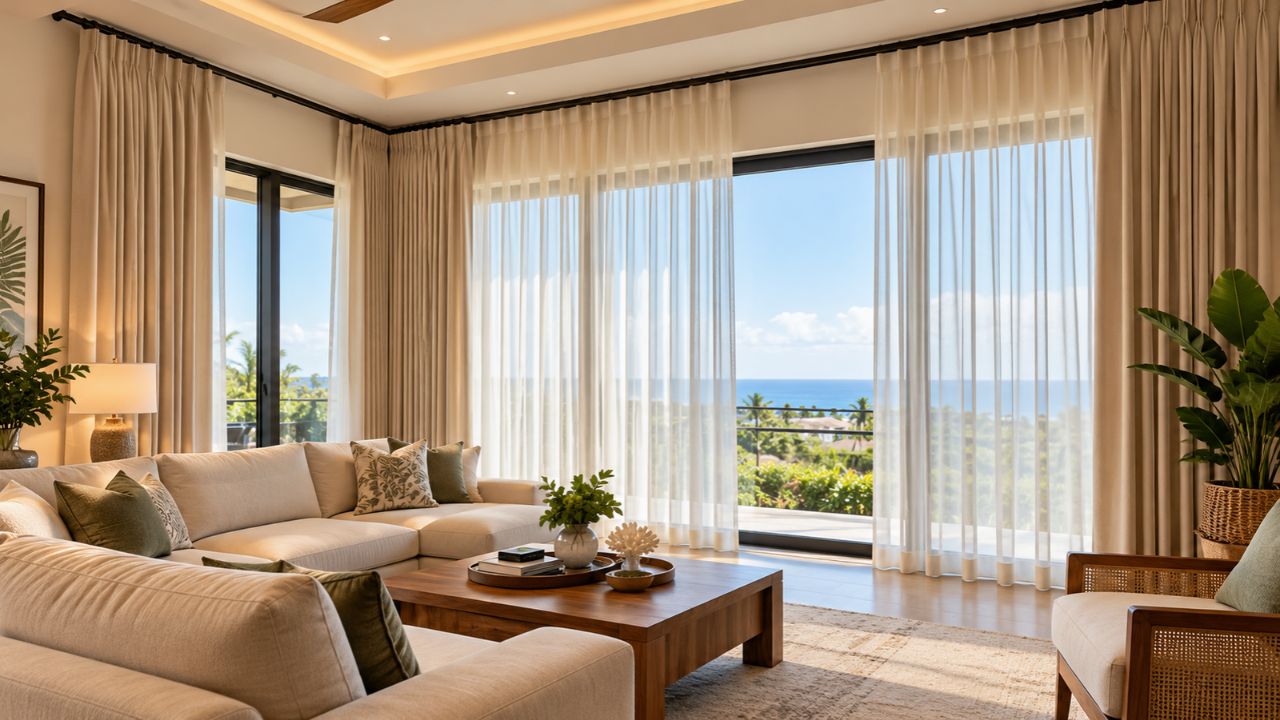
Living rooms are often central to the guest experience. Drapery should complement the seating arrangement, provide the desired level of light control, and frame the windows without making the room feel crowded.
Consider the available wall space and how far the panels will extend when open. This is particularly important when a room has large windows or an outdoor view that guests expect to enjoy.
Bedrooms
Bedrooms require particular attention to light control and privacy. Consider whether windows face neighboring properties, exterior walkways, or brightly lit outdoor areas.
More opaque drapery or a suitable lining may be appropriate when greater coverage is needed. If reducing incoming light is important, verify the product specifications instead of assuming that every lined panel blocks light completely.
Dining areas
Dining areas benefit from window treatments that coordinate with the furnishings and allow convenient movement around tables and chairs.
Check that drapery does not interfere with furniture placement, walkways, or access to outdoor spaces.
Sliding glass doors
Sliding glass doors require careful planning because guests may need to move the panels frequently to access a lanai, patio, or balcony.
Consider the available stacking space, track configuration, panel weight, and ease of operation. Confirm that the selected hardware is suitable for the panel dimensions and intended use.
For these openings, explore Aloha Drapery’s available drapery options and compare the available products with your window dimensions and operating requirements.
5. Choose Hardware That Supports Regular Use
Drapery hardware should support the weight of the fabric, allow smooth operation, and suit the property’s interior design.
In vacation rentals, window treatments may be opened and closed by different guests throughout the year. Suitable hardware can make everyday operation more convenient and help avoid problems caused by incorrect sizing or installation.
Before selecting a rod or track, review the following:
- Panel weight: Confirm that the hardware can support the complete installation.
- Window width: Wide openings may require additional supports or a track designed for the span.
- Operating clearance: Ensure panels move without catching on furniture, handles, or other obstacles.
- Mounting surface: Confirm that the fixing method is appropriate for the wall or ceiling construction.
- Maintenance access: Consider whether the installation allows practical cleaning and future repairs.
For large windows, sliding glass doors, or complex layouts, professional measurement and installation can help identify clearance and mounting issues before the drapery is made.
6. Measure Windows Before Ordering Drapery
Incorrect measurements can affect both the appearance and operation of window treatments, particularly when furnishing several rooms.
Before placing an order, record the window width, intended mounting position, desired panel length, and space available for the panels when open.
Avoid assuming that windows in different rooms are identical, even when they appear similar.
For wider openings, check whether the panels will provide the intended coverage when closed and whether enough room is available for them to stack when open.
If you are furnishing an entire vacation rental, organize measurements by room and window identifier. This makes it easier to match the correct fabric, dimensions, and hardware to each opening.
For additional guidance, read our guide to measuring windows correctly for custom drapery installation.
Accurate measurements help you plan the installation before ordering and reduce the risk of avoidable sizing problems.
7. Compare Upfront Cost With Long-Term Maintenance
When furnishing a vacation rental, the lowest initial price is not always the best measure of value.
A more useful comparison considers the purchase price, cleaning requirements, hardware suitability, replacement availability, and expected maintenance needs.
Before making a decision, compare the complete cost of the proposed window-treatment setup rather than looking at fabric price alone.
For example, a property with several large windows may require additional fabric, specialized hardware, or professional installation. Understanding these requirements in advance can help you budget more accurately.
Keep records of the selected fabric, lining, hardware, measurements, and care instructions. This information can simplify future maintenance and help maintain a consistent appearance when individual panels need replacing.
8. Maintain a Consistent Look Across Multiple Rental Units
Property managers furnishing several units may benefit from establishing a consistent window-treatment specification.
Using coordinated colors, compatible hardware, and documented measurements can simplify future replacements and help maintain a recognizable interior style.
Consistency does not mean every room must look identical. Bedrooms, living rooms, and dining areas can have different requirements while retaining a shared design approach.
For properties with multiple layouts, establish a small selection of approved fabrics and hardware configurations. This can simplify purchasing decisions while allowing each room to receive an appropriate treatment.
A documented specification can also help property managers communicate requirements to suppliers and maintenance teams when updates are needed.
Frequently Asked Questions
What drapery is suitable for a Hawaii vacation rental?
The best option depends on the room, interior design, sunlight exposure, privacy requirements, and cleaning needs. Compare fabric care instructions, opacity, and hardware compatibility before making a selection.
Which drapery fabrics are easiest to maintain in vacation rentals?
Maintenance requirements vary by fabric construction and finish. Review the manufacturer’s cleaning instructions, wrinkle resistance, and replacement availability rather than choosing based on fiber type alone.
What should property owners consider when choosing drapery for sliding glass doors?
Consider the door width, panel weight, track configuration, stacking space, and ease of operation. The panels should provide the intended coverage without obstructing convenient access to the outdoor area.
How can property owners protect drapery from Hawaii’s coastal conditions?
Evaluate sunlight exposure, ventilation, moisture levels, and hardware materials. Follow the fabric’s care instructions and address underlying moisture issues instead of relying on window treatments to resolve them.
Choose Drapery for Your Hawaii Vacation Rental
The best drapery for a vacation rental balances interior design, practical maintenance, light control, hardware suitability, and the needs of the property’s occupants.
Start by identifying the purpose of each room, evaluating its windows and surrounding conditions, and selecting fabrics that meet the property’s care requirements. Accurate measurements and suitable hardware are equally important, particularly for wide windows and sliding glass doors.
Aloha Drapery offers window-treatment options for homeowners and property owners planning their interiors. Visit Aloha Drapery to explore available options and find a suitable starting point for your project.
With careful planning, vacation-rental window treatments can support a cohesive interior and make ongoing property maintenance more manageable.
Planning drapery for your home?
Order custom drapery made to your measurements in five easy steps, or request fabric swatches to see and feel them first.