



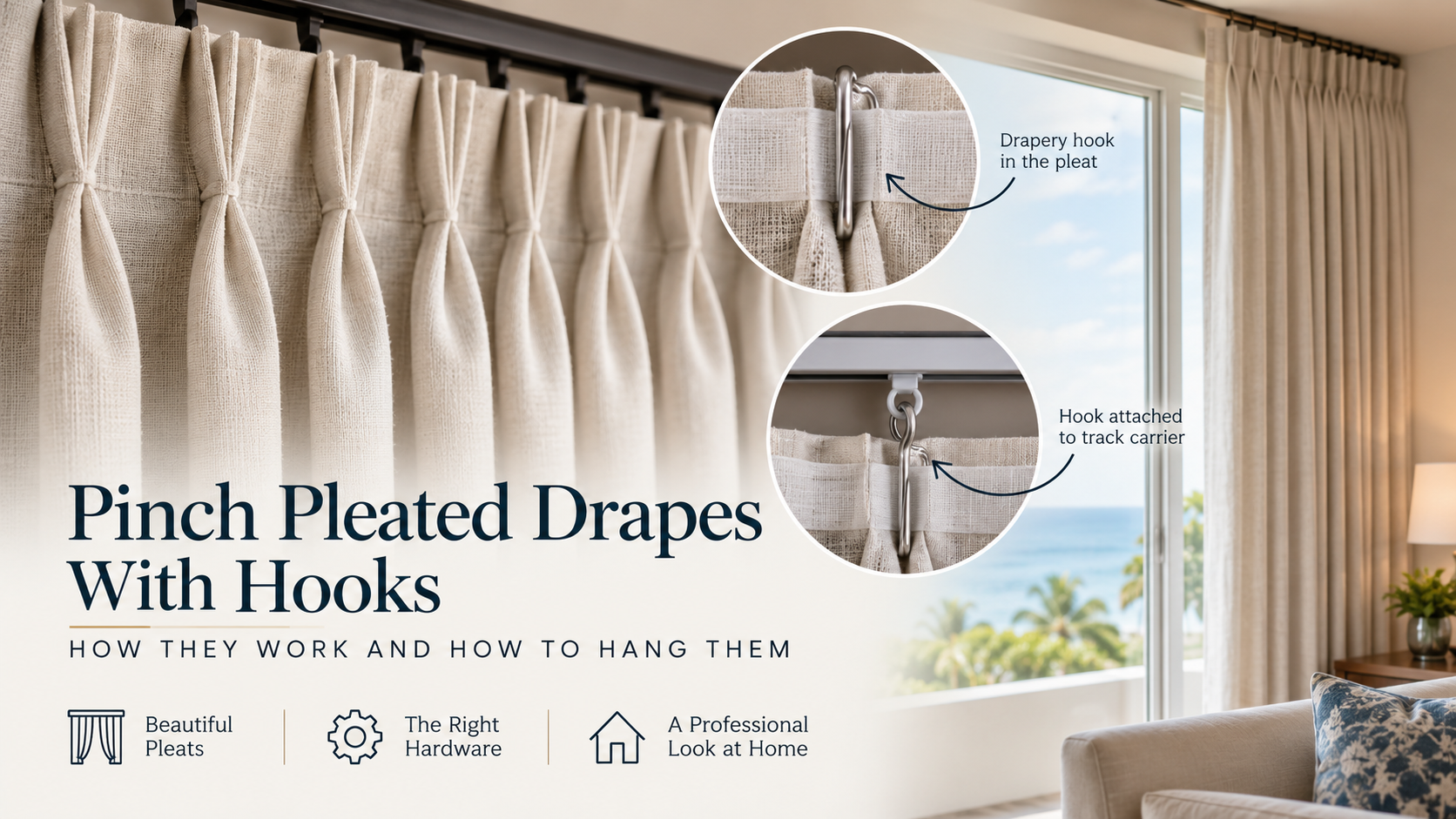
Pinch pleated drapes are a classic window treatment known for their structured folds and polished appearance. Unlike curtains that hang from a rod through a pocket or directly from grommets, pinch pleated drapes typically use drapery hooks attached to the back of the pleats. The hooks then connect to rings, carriers, or a compatible drapery track.
This combination provides a tailored look while allowing the fabric to open and close smoothly. Understanding how pinch pleated drapes with hooks work can make it easier to choose the right hardware, measure your windows, and achieve a professional-looking installation.
What Are Pinch Pleated Drapes?
Pinch pleated drapes are fabric panels sewn with evenly spaced pleats gathered together near the top. The pleats create controlled folds that continue down the length of the drape when it is hanging.
Common pinch pleat styles include:
- Two-finger pleats
- Three-finger pleats
- Four-finger pleats
- Five-finger pleats
The number and spacing of the pleats affect the fullness and overall appearance of the finished window treatment.
Because the pleats are permanently formed into the fabric, pinch pleated drapes generally maintain a more structured appearance than loose, gathered curtains.
How Do Pinch Pleated Drapes With Hooks Work?
Drapery hooks are small metal components inserted into the back of the pleated section. The hook is positioned so that it supports the fabric without being visible from the front.
Depending on the hardware, the hook can connect to:
- Drapery rings
- Track carriers
- Traverse rods
- Curtain track systems
- Other compatible drapery hardware
When the drapes are opened or closed, the carriers or rings move along the rod or track while the hooks hold the pleated fabric in position.
This creates a clean installation without requiring the hardware to be visible across the front of the drapery.
Where Are the Hooks Inserted?
The exact placement depends on the construction of the drape and the type of hook being used.
For sewn-in pinch pleats, hooks are generally inserted into the back of the pleated header. The hook should be positioned securely within the fabric structure rather than simply pushed through the front-facing portion of the drape.
Incorrect placement can cause several problems, including:
- Uneven pleats
- Drapes hanging at different heights
- Hooks pulling out of the fabric
- Fabric damage
- An uneven top line
For custom-made drapes, the header construction can be designed specifically for the selected hardware, which helps produce a more consistent finished appearance.
What Hardware Can Be Used With Pinch Pleated Drapes?
Pinch pleated drapes are versatile because they can work with several types of hardware.
Drapery Rods With Rings
A traditional option is a decorative rod with rings. The hooks attach to the rings, allowing the panels to move across the rod.
This approach works well when the hardware is intended to be part of the room’s overall design.
Drapery Tracks
A track provides a more streamlined appearance. Hooks attach to carriers inside the track, allowing the drapes to glide across the window.
Tracks can be particularly useful for large windows, wide openings, or installations where a clean architectural appearance is preferred.
Traverse Hardware
Traverse systems allow the drapes to be opened and closed using a cord or wand rather than manually pulling the fabric.
This can be useful for larger windows where manually moving heavy panels would be inconvenient.
Custom Curtain Track Systems
A custom curtain track system can be designed around the dimensions and configuration of the window. Depending on the project, the system may accommodate straight or specialty configurations and can be selected to work with the weight and style of the drapery.
How to Hang Pinch Pleated Drapes With Hooks
Once the correct hooks and compatible hardware have been selected, hanging the drapes involves several basic steps.
1. Check the Drapery Hardware
Before hanging the panels, confirm that the rod, rings, track, or carriers are properly installed and compatible with the hooks.
The hardware should be securely attached and capable of supporting the weight of the finished drapes.
2. Install the Drapery Hooks
Insert the hooks into the back of the pinch pleats according to the spacing established by the drapery construction.
Keep the hook placement consistent from pleat to pleat. Uneven spacing can affect how the panels hang and how the folds form.
3. Attach the Hooks to the Rings or Carriers
Once the hooks are installed, attach each hook to its corresponding ring or carrier.
Work across the panel systematically rather than attaching hooks randomly. This makes it easier to maintain consistent spacing and prevents missed carriers.
4. Hang the Drapery Panels
Lift the panel carefully and connect the hooks to the installed hardware.
For wide or heavy drapes, having another person assist with this step can make handling easier and reduce the chance of pulling or damaging the fabric.
5. Adjust the Pleats
After the panel is hanging, gently arrange the folds so the pleats fall evenly.
Do not force the fabric into sharp folds. Allow the construction of the pleats to guide the natural shape of the drape.
6. Check the Finished Length
Stand back and check the bottom edge of the drape.
The finished panels should hang consistently across the window. If one side is noticeably higher or lower, check the hook placement and carrier connections before making other adjustments.
How Many Hooks Do Pinch Pleated Drapes Need?
There isn’t one universal number of hooks for every pinch pleated drape.
The number depends on factors such as:
- Panel width
- Pleat spacing
- Fabric weight
- Header construction
- Hardware type
- Manufacturer or workroom specifications
Custom drapery panels may be constructed with a specific hook spacing based on the design and hardware being used.
Rather than choosing a hook count solely based on the width of the window, follow the specifications for the particular drapery construction and hardware system.
Can You Use Pinch Pleat Hooks on Any Curtain?
Not necessarily.
Pinch pleat hooks are designed to work with drapery headers that can accommodate them. Standard curtains made for rod pockets, grommets, or certain other hanging methods may not have the appropriate construction.
Trying to insert hooks into unsuitable fabric can damage the material or result in an unstable installation.
If you want to convert an existing curtain to a pinch pleat hanging style, the header construction should be evaluated first.
Pinch Pleat Hooks vs. Curtain Rings
Both systems can provide an attractive finished installation, but they work differently.
With pinch pleat hooks and rings, the hooks connect the back of the pleated drape to rings that travel along the rod.
With a track system, the hooks typically connect to carriers that move inside the track.
The choice depends on the desired appearance, window configuration, operating requirements, and weight of the drapery.
Tips for Getting an Even, Professional Look
Small installation details can make a significant difference in the finished appearance of pinch pleated drapes.
Keep Hook Placement Consistent
Hooks that are installed at inconsistent heights can cause the top of the drapery to appear uneven.
Use Compatible Hardware
The hook, ring, carrier, rod, or track should be selected as a complete system rather than mixing incompatible components.
Consider the Fabric Weight
Heavier fabrics place more demand on the hardware. The track or rod should be capable of supporting the finished panels without sagging.
Measure Before Ordering
Measure the window and determine the desired mounting position before ordering custom drapery.
Consider:
- Window width
- Window height
- Mounting height
- Desired finished length
- Hardware projection
- Fullness
- Stack-back space
Don’t Pull on the Fabric
When opening or closing the drapes, use the intended operating mechanism when one is provided. Repeatedly pulling heavily on the fabric can place unnecessary stress on the hooks and header.
When Should You Consider Professional Installation?
Installing a small, lightweight drapery panel can be relatively straightforward when the hardware is already in place. Larger or more complex installations can require greater precision, making professional drapery installation a practical option for achieving proper alignment, secure mounting, and smooth operation.
Professional drapery installation may be useful when you have:
- Large or unusually wide windows
- Heavy drapery
- Multiple panels
- High ceilings
- Specialty-shaped windows
- Ceiling-mounted tracks
- Multiple curtain layers
- Motorized or traversing systems
- Custom curtain track systems
A professional installer can also check measurements, mounting points, panel alignment, hook placement, and final drapery operation. This can help ensure that pinch pleated drapes with hooks hang evenly and operate properly without putting unnecessary stress on the fabric or hardware.
Similar link:
Pinch Pleated Drapes With Hooks for Hawaii Homes
Pinch pleated drapes can work particularly well in Hawaii interiors where homeowners want a tailored window treatment without sacrificing flexibility in design.
The fabric, lining, hardware, and installation method can all be selected according to the room and window.
For example, a homeowner may consider different combinations of:
- Lightweight decorative fabrics
- Room-darkening lining
- Privacy lining
- Solar-control window treatments
- Decorative rods
- Drapery tracks
- Layered window treatments
The right combination depends on factors such as the room’s exposure, window size, interior design, privacy requirements, and desired light control.
Frequently Asked Questions
What are pinch pleated drapes with hooks?
Pinch pleated drapes with hooks are fabric panels with permanently structured pleats at the top. Drapery hooks are inserted into the back of the pleated header and connect to rings, carriers, or compatible drapery hardware.
Can pinch pleated drapes hang from a track?
Yes. Pinch pleated drapes can be designed to work with compatible drapery tracks. Hooks connect the panels to carriers that move along the track.
Are pinch pleat hooks visible?
Normally, the hooks are positioned behind the pleated header, so they are largely concealed when the drape is viewed from the room.
Can I install pinch pleated drapes myself?
It depends on the size and complexity of the installation. Smaller panels with existing compatible hardware may be manageable as a DIY project. Large, heavy, high-mounted, or custom installations may benefit from professional installation.
How do I keep pinch pleats even?
Consistent hook placement, appropriate hardware, correct panel construction, and careful adjustment after installation all help keep the pleats evenly aligned.
Do pinch pleated drapes need special rods?
They need hardware that is compatible with the hooks and header construction. Depending on the design, this can include rods with rings, traverse hardware, or drapery tracks.
Final Thoughts
Pinch pleated drapes with hooks combine a structured, tailored appearance with flexible hanging options. Whether you choose ready made pinch pleat drapes or custom panels, the hooks connect the pleated header to rings, carriers, or other compatible hardware, allowing the panels to move smoothly while keeping the pleats organized.
For the best result, the drapery construction, hook placement, hardware, measurements, and installation method should all work together. When the project involves large windows, heavy fabrics, specialty hardware, or custom track systems, professional installation can help ensure the finished treatment operates smoothly and hangs evenly.
For homeowners considering custom or ready to hang pinch pleat drapes, selecting the fabric and pleat style is only part of the process. The hanging system is equally important for achieving the appearance and functionality you want.
Planning drapery for your home?
Order custom drapery made to your measurements in five easy steps, or request fabric swatches to see and feel them first.