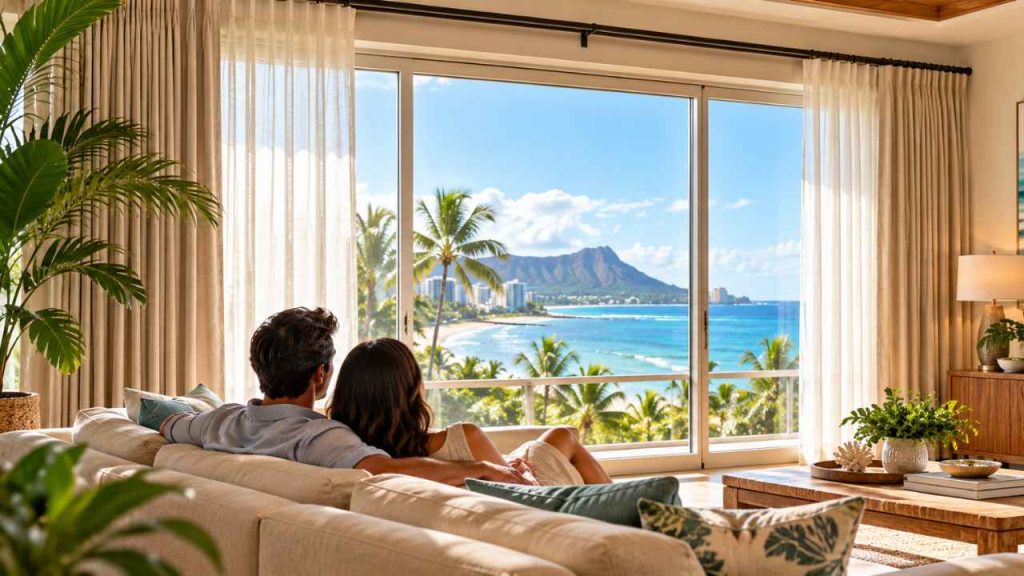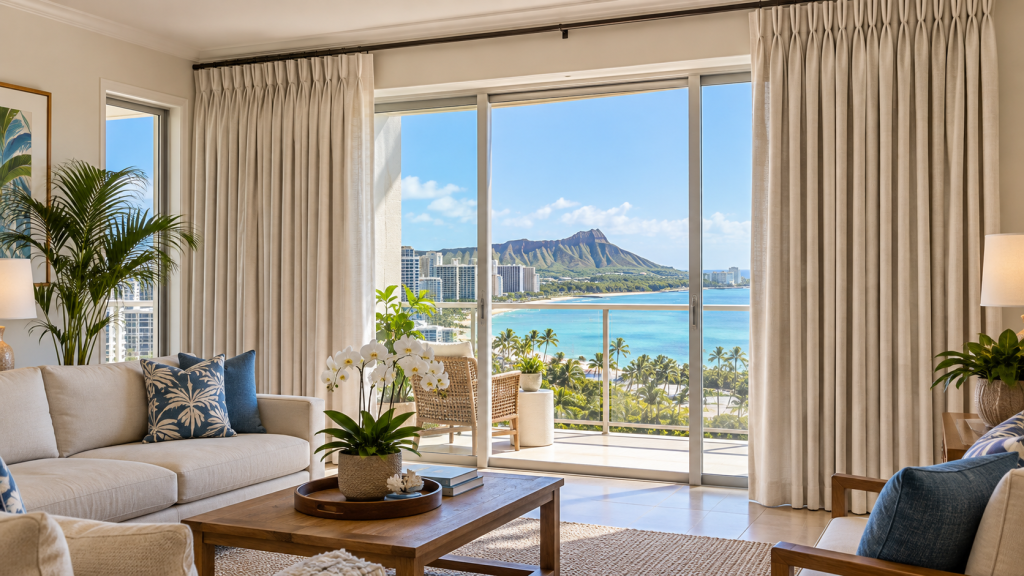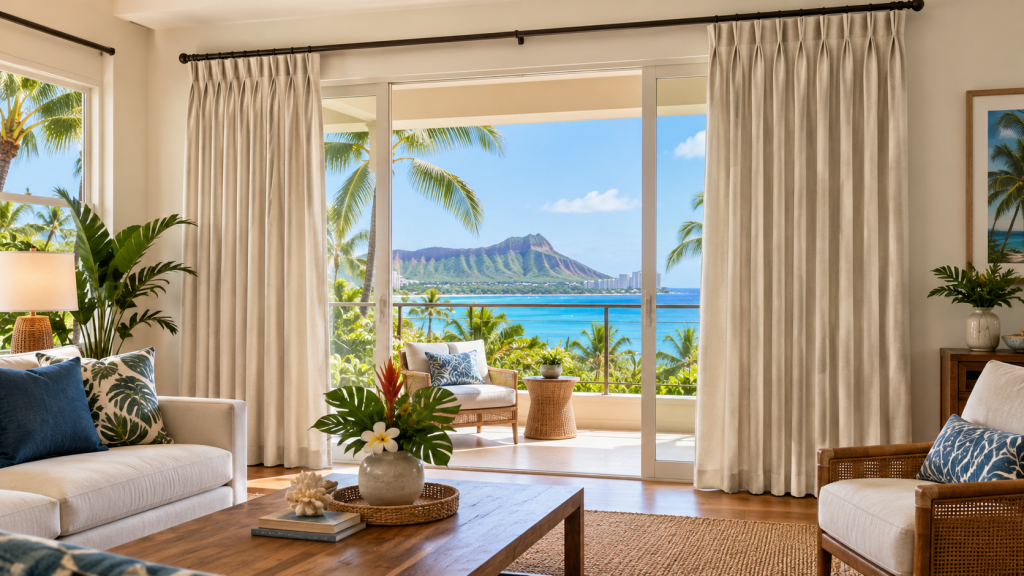


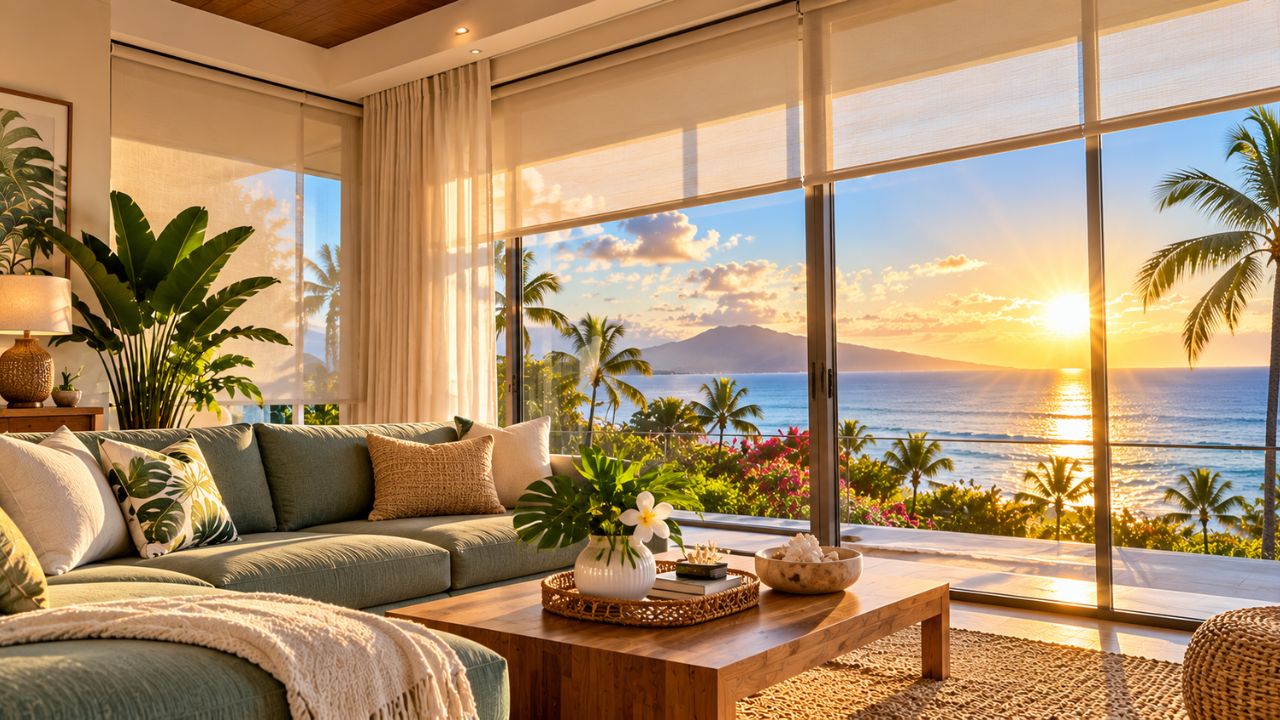
Hawaii’s abundant sunshine is one of the biggest advantages of island living. Natural light can make a home feel open, bright, and connected to the outdoors. But strong sunlight coming through large windows can also create glare, increase indoor heat, fade furnishings, and make certain rooms uncomfortable during the brightest parts of the day.
That is why choosing window treatments for Hawaii sunlight requires more than selecting a curtain color or pattern. The right treatment should balance sunlight control, UV protection, privacy, ventilation, and interior style.
Whether your home has floor-to-ceiling glass, sliding doors, bedroom windows, or a sunny home office, understanding how different window treatments perform in strong sunlight can help you make a more practical choice.
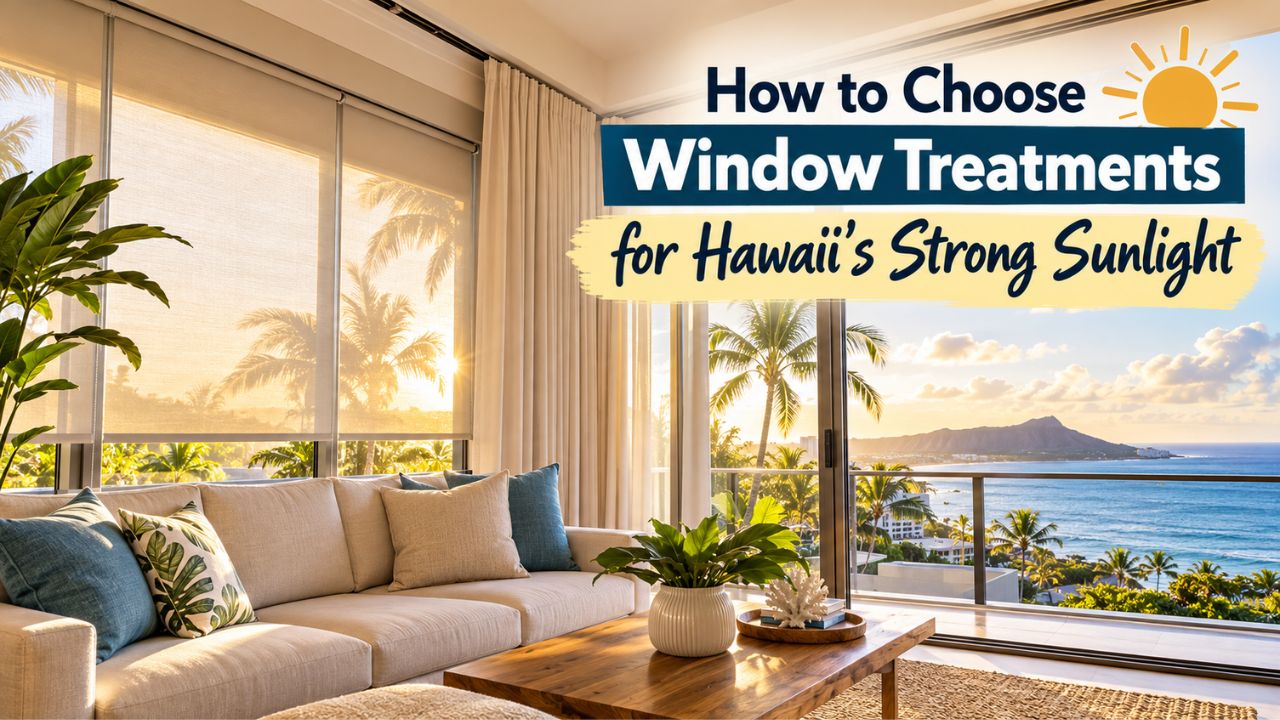
Why Hawaii’s Strong Sunlight Matters When Choosing Window Treatments
Windows are an important source of natural light, but direct sunlight can affect both comfort and interior furnishings.
Depending on the orientation and size of your windows, excessive sunlight may contribute to:
- Glare on televisions and computer screens
- Increased heat inside sun-exposed rooms
- Fading of flooring, furniture, artwork, and fabrics
- Difficulty sleeping in bright bedrooms
- Reduced privacy during certain times of the day
- Uneven lighting throughout a room
Instead of completely blocking natural light, many homeowners can benefit from window treatments that filter, diffuse, or control sunlight according to the time of day.
The goal is to create a more comfortable interior while still enjoying Hawaii’s outdoor views and natural brightness.
1. Start by Understanding How Much Sun Your Windows Receive
Before choosing a window treatment, observe your windows at different times of the day.
A window receiving gentle morning light may require a different solution from one exposed to intense afternoon sunlight.
Consider:
- Which direction the window faces
- How many hours of direct sunlight it receives
- Whether the window is shaded by trees or nearby buildings
- Whether it is a large glass wall or a smaller window
- Whether glare affects a television or computer
- Whether the room becomes noticeably warmer during the day
Large windows and sliding glass doors deserve particular attention because they can expose a significant portion of the room to direct sunlight.
Understanding the exposure first makes it easier to select the appropriate fabric, opacity, and operating style.
2. Consider Solar Shades for Strong Sun and Glare
Solar shades can be a practical option when your main concern is controlling sunlight and glare while maintaining an outside view.
Unlike traditional blackout treatments, solar shades can filter incoming sunlight without necessarily making the room completely dark.
They can be particularly useful for:
- Living rooms with large windows
- Home offices
- Rooms with ocean or landscape views
- Media areas affected by screen glare
- Contemporary homes with expansive glass
For homeowners dealing with intense sunlight, solar shades for sunlight and glare control can provide a practical way to manage brightness while preserving exterior views.
Aloha Drapery offers MechoShade roller shades in different openness levels, including 1%, 3%, and blackout options. The appropriate openness level depends on how much light, glare, privacy, and exterior visibility you want to maintain.
3. Look for Fabrics and Linings That Help Manage UV Exposure
Strong sunlight does more than brighten a room. Prolonged exposure can contribute to fading and deterioration of interior furnishings.
Furniture, rugs, wood flooring, artwork, and decorative fabrics can all be affected by repeated sunlight exposure.
When selecting window treatments for Hawaii, ask about:
- UV-resistant fabrics
- Solar-screen fabrics
- Protective linings
- Light-filtering materials
- Room-darkening options
- Fabric durability in sun-exposed locations
A protective window treatment can reduce the amount of direct sunlight reaching interior surfaces.
For especially sunny rooms, combining a performance shade with decorative drapery can provide another layer of protection and design flexibility.
4. Choose Light-Filtering Treatments When You Want Natural Light
Not every room needs blackout coverage.
If your goal is to soften harsh sunlight while keeping the room bright, consider light-filtering treatments.
Sheer or semi-sheer fabrics can diffuse incoming sunlight and create a softer appearance than uncovered glass.
They can work well in:
- Living rooms
- Dining rooms
- Open-concept spaces
- Rooms where outdoor views are important
- Areas where complete darkness is unnecessary
The advantage is that you can reduce the intensity of direct sunlight without giving up the bright, airy feeling that makes many Hawaii homes appealing.
However, sheer treatments alone may not provide sufficient light control for bedrooms or rooms receiving intense afternoon sun.
5. Consider Blackout Treatments for Bedrooms
Bedrooms have different requirements from living areas.
If sunlight enters your bedroom early in the morning or makes the room uncomfortable during the day, blackout or room-darkening window treatments may be worth considering.
Blackout treatments can help:
- Reduce incoming light
- Improve nighttime privacy
- Create a darker sleeping environment
- Reduce glare
- Provide additional coverage around the window
A blackout treatment can be especially useful when the bedroom has large windows or receives direct sunlight.
Aloha Drapery also offers MechoShade blackout roller shade options for situations where stronger light control is required.
6. Think About Heat, Not Just Brightness
One common mistake is choosing a window treatment based only on appearance.
If a room becomes noticeably warmer when sunlight enters through the windows, you should also consider how effectively the treatment manages solar heat.
Solar shades and other performance-oriented treatments can help reduce the amount of solar radiation entering the room while still allowing some natural light.
For large areas of glass, this can be particularly important.
You should consider:
- Window size
- Glass type
- Direct sunlight exposure
- Room orientation
- Existing air conditioning
- Desired level of natural light
A window treatment that reduces glare but does not provide the level of solar control you need may not solve the entire problem.
7. Use Layered Window Treatments for More Flexible Sun Control
Some Hawaii homes benefit from using more than one type of window treatment.
For example, you could combine a light-filtering shade with decorative drapery.
During the day, the shade can help manage sunlight while the drapery adds another layer of coverage when needed.
Layering can provide:
- Flexible light control
- Additional privacy
- More design options
- Additional protection for furnishings
- A softer finished appearance
This approach is particularly useful in living rooms and bedrooms where homeowners want both practical performance and decorative appeal.
Layering is already a recurring topic on the Aloha Drapery blog, so in this article it should be discussed specifically as a sun-control strategy, rather than becoming another general layering tutorial.
8. Pay Attention to Window Size and Coverage
The effectiveness of a window treatment depends partly on how well it covers the opening.
Large windows and sliding glass doors can present different installation challenges from standard-sized windows.
If there are significant gaps around the treatment, sunlight can continue entering around the edges even when the main fabric or shade is closed.
For oversized windows, consider:
- Precise measurements
- Appropriate hardware
- Correct mounting
- Panel width
- Shade openness
- Ease of operation
When you need a solution designed specifically around your home’s windows, custom window treatments in Hawaii can provide greater flexibility in sizing, fabric selection, and overall design.
Professional measurement and installation can also be particularly helpful for large windows and sliding glass doors because the hardware, measurements, and weight distribution need to be handled correctly.
For homeowners installing large or custom window treatments, professional window treatment installation can help ensure the treatment is properly fitted and operates as intended.
9. Choose Colors With Sun Exposure in Mind
Color is another consideration when selecting window treatments for a sunny Hawaii home.
Light-colored treatments can complement bright, tropical interiors and create a relaxed appearance. Neutral shades such as sand, ivory, beige, and soft gray can also work well with coastal and contemporary interiors.
However, don’t choose a fabric solely because of its color.
For windows receiving strong direct sunlight, pay more attention to:
- Fabric construction
- Performance characteristics
- UV resistance
- Lining
- Expected durability
- Cleaning requirements
A beautiful fabric that is not appropriate for a high-sun location may not provide the long-term performance you expect.
10. Match the Window Treatment to the Room
Different rooms have different sunlight-control requirements.
Living Room
Living rooms often benefit from treatments that reduce glare while preserving natural light and outdoor views.
Solar shades, light-filtering shades, or layered treatments can be considered depending on the amount of sunlight.
Bedroom
Bedrooms generally require stronger light and privacy control.
Blackout or room-darkening treatments may be appropriate, particularly for windows exposed to early morning sunlight.
Home Office
Glare can make computer screens difficult to view.
A solar shade with an appropriate openness level can help manage glare while maintaining useful natural light.
Dining Room
Dining areas often benefit from softer light-filtering treatments that control harsh sunlight without making the room feel dark.
Large Sliding Glass Doors
Large glass doors require treatments that are easy to operate and appropriately sized for the opening.
Custom drapery, track systems, or roller shades can be considered depending on the layout and desired appearance.
11. Don’t Forget Hawaii’s Coastal Environment
Sunlight is not the only environmental factor to consider.
Homes near the ocean may also experience salty air and higher humidity. This makes material selection and maintenance important considerations.
When choosing window treatments for a coastal Hawaii home, think about:
- Fabric durability
- Cleaning requirements
- Moisture exposure
- Hardware quality
- Ease of operation
- Long-term maintenance
The goal is to choose a treatment that works with the environment rather than simply looking good when it is first installed.
12. Consider Motorized Window Treatments for Hard-to-Reach Windows
Motorization can be useful when windows are very large, positioned high above the floor, or difficult to operate manually.
Instead of walking to each window, motorized treatments can allow you to adjust shades more conveniently.
Depending on the system, motorization may provide options such as:
- Remote operation
- Scheduled opening and closing
- Smart-home integration
- Easier control of large window areas
This can be particularly useful for modern Hawaii homes with extensive glass.
13. Think About Your Priorities Before Choosing
There is no single window treatment that is ideal for every Hawaii home.
Before making a purchase, identify your biggest concern.
| Your Main Concern | Window Treatment Feature to Consider |
|---|---|
| Harsh sunlight | Light-filtering or solar shade |
| Glare | Solar shade with appropriate openness |
| Maximum darkness | Blackout treatment |
| Protecting furnishings | UV-reducing/performance fabric |
| Maintaining outdoor views | Solar shades |
| Privacy | Light-filtering, room-darkening, or layered treatment |
| Large windows | Custom-sized shades or drapery |
| Difficult-to-reach windows | Motorized operation |
| Decorative appearance | Custom drapery |
| Flexible light control | Layered window treatments |
This approach helps you select a treatment based on how the room actually functions instead of choosing purely from appearance.
Common Mistakes to Avoid When Choosing Window Treatments for Hawaii
Choosing a Treatment Based Only on Color
A beautiful curtain may not provide enough protection from direct sunlight.
Ignoring Glare
A room can be bright without being comfortable. If sunlight reflects off a television or computer screen, glare control should be part of your decision.
Using the Same Treatment Throughout the House
Every room can have different sunlight exposure and privacy requirements.
Forgetting About Fabric Performance
High-sun locations require materials that can handle repeated exposure.
Installing Treatments Without Accurate Measurements
Even a high-quality window treatment may perform poorly if it does not properly cover the window.
Blocking All Natural Light
Complete blackout is not necessary in every room. In many living areas, filtering sunlight can provide a better balance between brightness and comfort.
Final Thoughts: Choose Window Treatments Based on How Your Home Gets Sun
The best window treatments for Hawaii sunlight are not necessarily the heaviest curtains or the darkest shades. The right solution depends on how much direct sunlight your windows receive, how you use each room, how much glare and heat you experience, and whether preserving outdoor views is important to you.
Solar shades can be useful for managing glare and sunlight while maintaining views. Light-filtering fabrics can soften harsh daylight, while blackout treatments can provide stronger control in bedrooms and other spaces. Custom drapery can add another layer of protection while bringing texture and personality to the interior.
For homes with large or unusually shaped windows, professional measurement and installation can also make a significant difference in achieving proper coverage and smooth operation.
Aloha Drapery offers custom and ready-to-hang drapery solutions manufactured in Hawaiʻi, along with roller shade options and professional installation services.
If you are dealing with strong sunlight, glare, or heat in your Hawaii home, start by identifying the specific problem each window creates. From there, you can select a window treatment that provides the right combination of sunlight control, comfort, privacy, and style.
Planning drapery for your home?
Order custom drapery made to your measurements in five easy steps, or request fabric swatches to see and feel them first.