


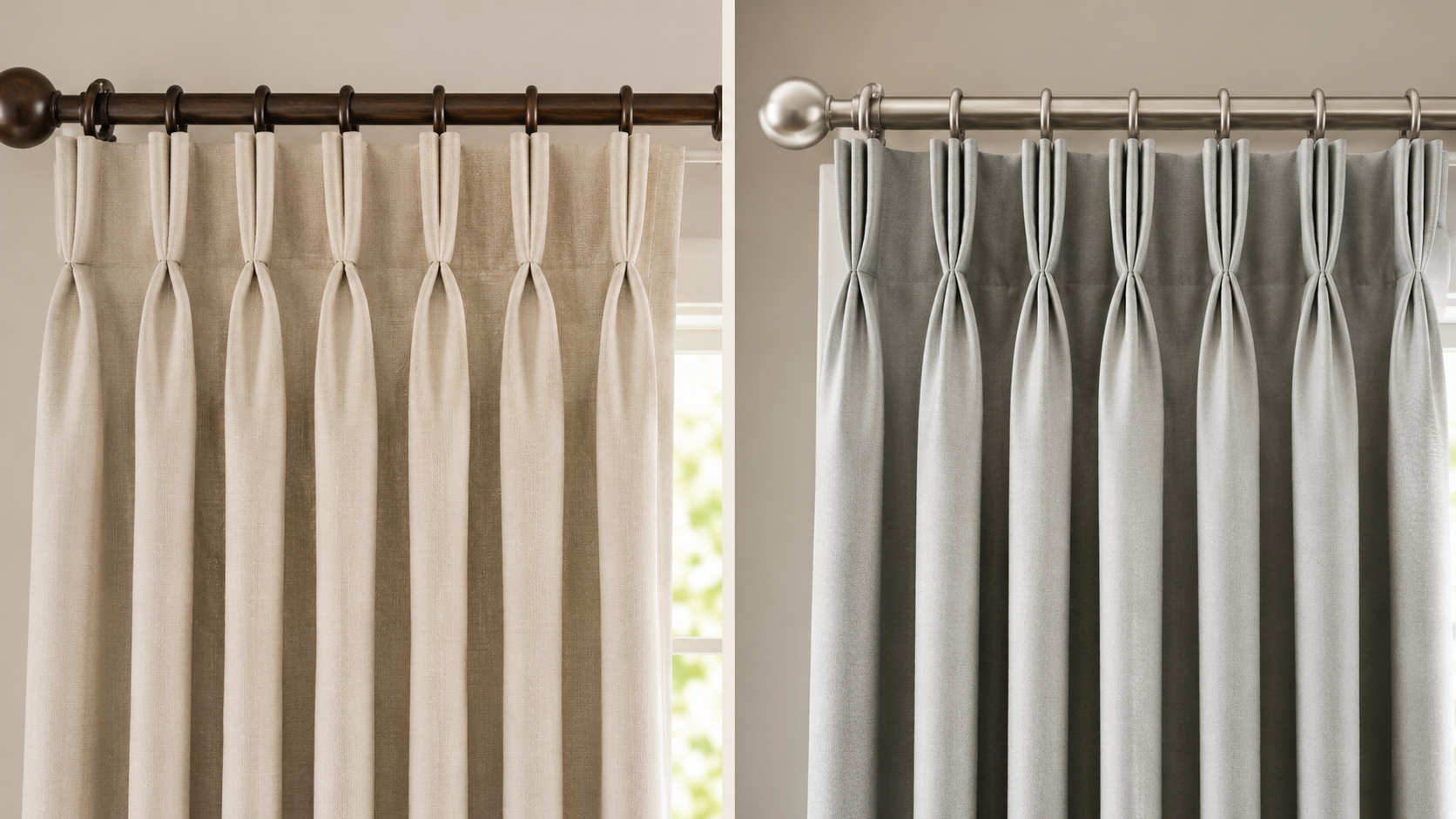
Curtains do much more than cover windows. They shape the atmosphere of a room, enhance privacy, improve insulation, and complete your interior design. Among the many heading styles available, Pinch Pleat vs Triple Pleat is one of the most common comparisons homeowners face when selecting custom drapes.
While both options offer a sophisticated appearance, they differ in fullness, fabric usage, pricing, and overall aesthetic. Understanding these differences will help you invest in curtains that complement your home’s style while meeting your practical needs.
In this guide, we’ll compare Pinch Pleat vs Triple Pleat in detail, covering design, functionality, maintenance, costs, and ideal applications.
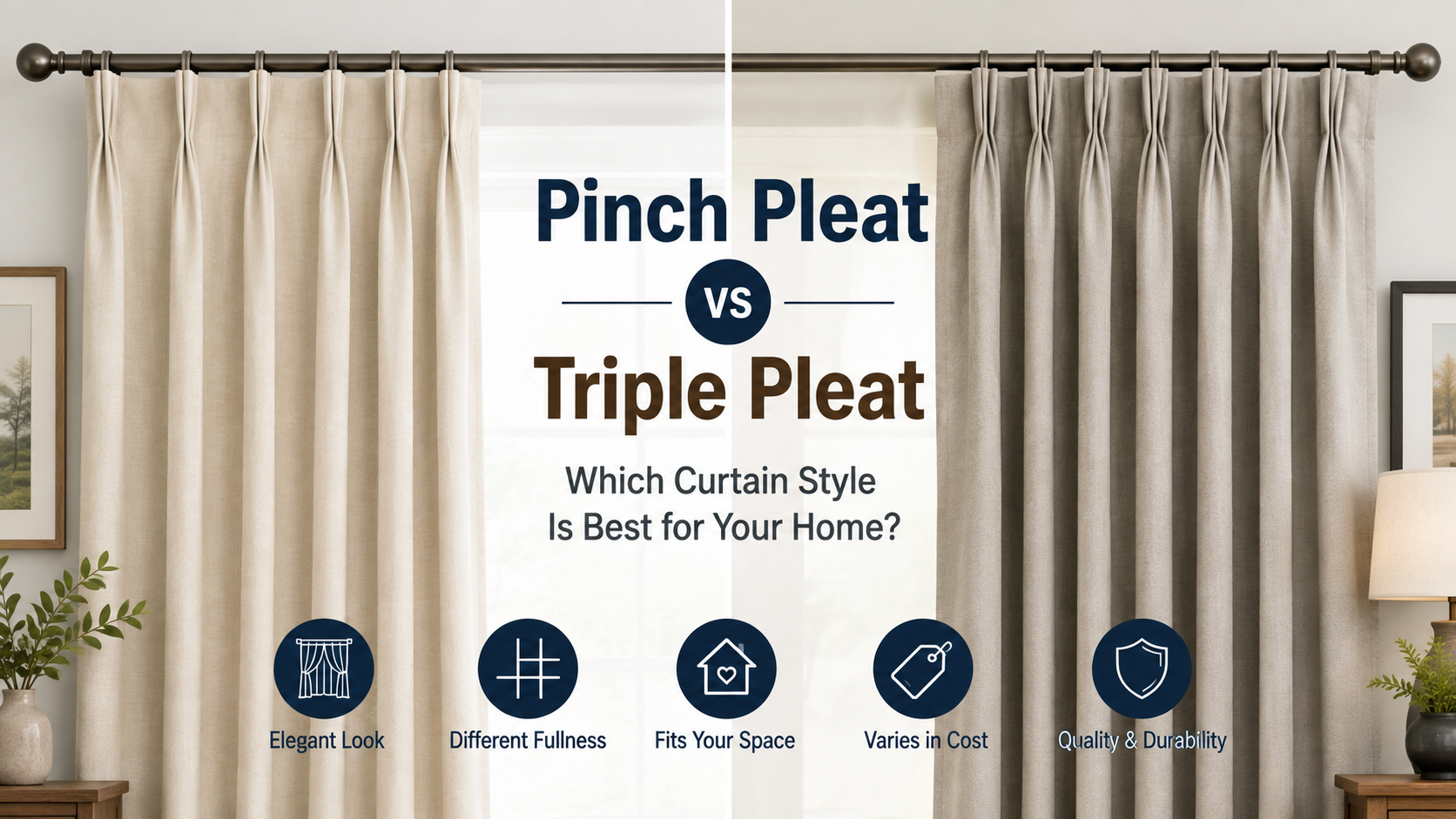
What Are Pinch Pleat Curtains?
Pinch pleat curtains feature evenly spaced pleats sewn together near the top of the curtain. These pleats create a structured look while allowing the fabric to hang gracefully.
Typically, pinch pleat curtains come with:
- Two-finger pleats
- Three-finger pleats
- Occasionally four-finger pleats for luxury installations
They are commonly attached to traverse rods or decorative curtain rings using hooks.
Key Characteristics
- Clean and tailored appearance
- Moderate fullness
- Excellent drape
- Suitable for both traditional and modern interiors
What Are Triple Pleat Curtains?
Triple pleat curtains are actually a specific type of pinch pleat curtain featuring three folds (or fingers) pinched together at each heading.
Because each pleat contains more fabric, triple pleat curtains provide:
- Richer appearance
- Greater fullness
- More luxurious folds
- Superior fabric draping
Triple pleats are frequently used in premium custom window treatments.
Pinch Pleat vs Triple Pleat: Quick Comparison
| Feature | Pinch Pleat | Triple Pleat |
|---|---|---|
| Pleat Style | Two or more pleats | Three pleats per heading |
| Fullness | Medium | High |
| Fabric Required | Less | More |
| Cost | More affordable | Higher investment |
| Appearance | Elegant and neat | Luxurious and formal |
| Weight | Lighter | Slightly heavier |
| Best For | Everyday homes | Premium interiors |
Design Differences
Pinch Pleat
Pinch pleats create consistent folds without excessive bulk. They offer a balanced appearance that works across many decorating styles.
They’re ideal if you want:
- Timeless elegance
- Simplicity
- Flexible interior styling
Triple Pleat
Triple pleats use more fabric within each pleat, creating deeper folds and richer volume.
This style delivers:
- Luxury hotel appearance
- Dramatic draping
- High-end designer finish
Fabric Fullness Comparison
One of the biggest differences in Pinch Pleat vs Triple Pleat is fullness.
Pinch Pleat
- Approximately 2 to 2.25 times fabric fullness
- Smooth appearance
- Moderate volume
Triple Pleat
- Around 2.5 to 3 times fabric fullness
- Rich folds
- Heavier drape
- More luxurious texture
If fullness is your priority, triple pleats clearly stand out.
Cost Comparison
Since triple pleats require additional fabric and labor, they naturally cost more.
Pinch Pleat
- Lower fabric consumption
- Less sewing time
- Better for budget-conscious homeowners
Triple Pleat
- Higher fabric requirements
- Increased tailoring
- Premium pricing
Although more expensive, many homeowners appreciate the elevated look.
Which Style Looks More Luxurious?
When comparing Pinch Pleat vs Triple Pleat, triple pleats usually create the more luxurious appearance, making them a popular choice for drapes for living room spaces where a rich, elegant look is desired.
Their additional folds provide:
- Better depth
- Enhanced texture
- Fuller silhouette
- Designer-quality finish
Pinch pleats remain elegant but offer a slightly cleaner and more understated style.
Light Control and Privacy
Both heading styles perform similarly because light control depends mainly on:
- Fabric type
- Curtain lining
- Panel width
However, triple pleat curtains generally hang slightly heavier, helping create a tighter seal around the window.
This can improve:
- Privacy
- Light blocking
- Energy efficiency
Read More: Pinch Pleat Drapes vs. Other Window Treatments: A Comparative Guide
Best Fabrics for Pinch Pleat Curtains
Pinch pleats work well with many fabrics, including:
- Cotton
- Linen blends
- Polyester
- Velvet
- Silk
- Blackout fabrics
Medium-weight fabrics often produce the best results.
Best Fabrics for Triple Pleat Curtains
Triple pleats especially complement premium materials such as:
- Velvet
- Heavy linen
- Silk
- Jacquard
- Wool blends
These fabrics emphasize the deeper folds beautifully.
Installation Considerations
Both curtain styles typically require:
- Curtain hooks
- Traverse rods
- Decorative rods with rings
- Proper measurements
Triple pleat curtains are slightly heavier, so choosing sturdy hardware is important.
Maintenance
Pinch Pleat
- Easier to handle
- Simpler to remove
- Lower overall weight
Triple Pleat
- Slightly heavier during cleaning
- Professional dry cleaning often recommended
- Holds pleats exceptionally well over time
Read More: Why Pinch Pleated Drapes Are so Popular
Best Rooms for Pinch Pleat Curtains
Pinch pleats are perfect for:
- Bedrooms
- Home offices
- Dining rooms
- Guest rooms
- Apartments
- Modern living rooms
Their versatile appearance works with almost any décor style.
Best Rooms for Triple Pleat Curtains
Triple pleats shine in:
- Formal living rooms
- Luxury master bedrooms
- High-ceiling spaces
- Hotels
- Executive offices
- Elegant dining rooms
They add instant sophistication to larger spaces.
Interior Style Compatibility
Pinch Pleat Complements
- Contemporary
- Transitional
- Scandinavian
- Traditional
- Farmhouse
Triple Pleat Complements
- Luxury interiors
- Classic homes
- Victorian
- French Country
- Modern luxury
- Boutique-inspired décor
Pros and Cons
Pinch Pleat Pros
- More affordable
- Elegant appearance
- Easier maintenance
- Less fabric required
- Versatile styling
Cons
- Slightly less dramatic
- Moderate fullness
Triple Pleat Pros
- Premium appearance
- Rich fabric folds
- Greater fullness
- Excellent draping
- High-end finish
Cons
- Higher cost
- Uses more fabric
- Heavier panels
Which One Should You Choose?
Choose Pinch Pleat if you:
- Want timeless elegance
- Have a moderate budget
- Prefer lighter curtains
- Need versatile styling
- Decorate a smaller room
Choose Triple Pleat if you:
- Want a luxurious designer look
- Prefer fuller curtains
- Have larger windows
- Like premium interiors
- Don’t mind spending a little more
Frequently Asked Questions
Are triple pleat curtains worth the extra cost?
Yes. If you value a fuller, more luxurious appearance, triple pleat curtains provide a noticeable upgrade in style and drape.
Which style uses more fabric?
Triple pleat curtains require significantly more fabric because each pleat contains three folds instead of fewer.
Are pinch pleat curtains outdated?
No. Pinch pleat curtains remain one of the most timeless curtain styles and continue to be popular in both classic and modern homes.
Can both styles be used with blackout curtains?
Absolutely. Both pinch pleat and triple pleat headings work exceptionally well with blackout fabrics.
Which is easier to maintain?
Pinch pleat curtains are generally easier to remove, clean, and reinstall because they use less fabric and weigh less.
Final Verdict
When comparing Pinch Pleat vs Triple Pleat, there isn’t a universal winner—it depends on your priorities.
If you’re looking for a versatile, elegant, and budget-friendly option, pinch pleat curtains are an excellent choice. They offer timeless appeal and work beautifully in nearly every room. If convenience is important, ready made pinch pleat drapes provide an easy way to achieve the same refined look without the wait for custom manufacturing.
If you want maximum fullness, dramatic draping, and a luxurious custom appearance, triple pleat curtains are worth the additional investment. Their rich folds and premium finish can elevate any living space.
Ultimately, the best curtain style is the one that complements your home’s décor, suits your budget, and delivers the look and functionality you desire.
Planning drapery for your home?
Order custom drapery made to your measurements in five easy steps, or request fabric swatches to see and feel them first.