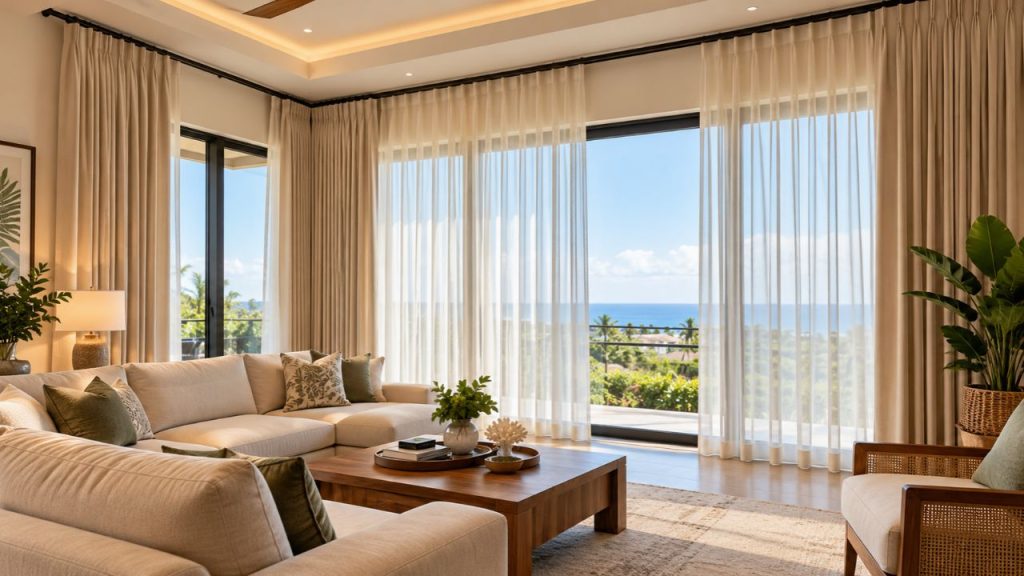


In interior design, we often talk about statement pieces—art, furniture, lighting. Yet one of the most powerful mood-setting elements in a home is frequently overlooked: drapery. When thoughtfully selected, drapery becomes the emotional anchor of a space, shaping how a room feels the moment you walk in.
Fabric as an Emotional Language
Every fabric tells a story, and drapery speaks directly to the atmosphere of a room.
- Linen creates an airy, relaxed feeling. Its natural weave allows light to filter softly, making it ideal for coastal, minimalist, or casual spaces where calm and openness are key.
- Velvet introduces drama and intimacy. Its depth and richness absorb light, adding warmth and a sense of luxury—perfect for dining rooms, formal living spaces, or bedrooms designed for comfort and elegance.
- Sheer panels soften interiors. They blur the line between indoors and outdoors, creating romantic, light-filled environments that feel gentle and welcoming.
Movement and Energy
Beyond fabric, how drapery moves influences the energy of a space. Flowing panels bring ease and softness, encouraging relaxation. Structured, tailored drapery adds formality, order, and confidence. Neither is better—the key is aligning movement with the emotional intention of the room.
Why Drapery Comes Before Furniture
In intentional design, drapery should be selected early in the process. It establishes the room’s tone, color direction, and level of formality, allowing furniture and accessories to support—not compete with—the mood.
Design takeaway:
Drapery isn’t background décor. It’s the emotional foundation that defines how a home feels, not just how it looks.
Planning drapery for your home?
Order custom drapery made to your measurements in five easy steps, or request fabric swatches to see and feel them first.